2. The Cottage
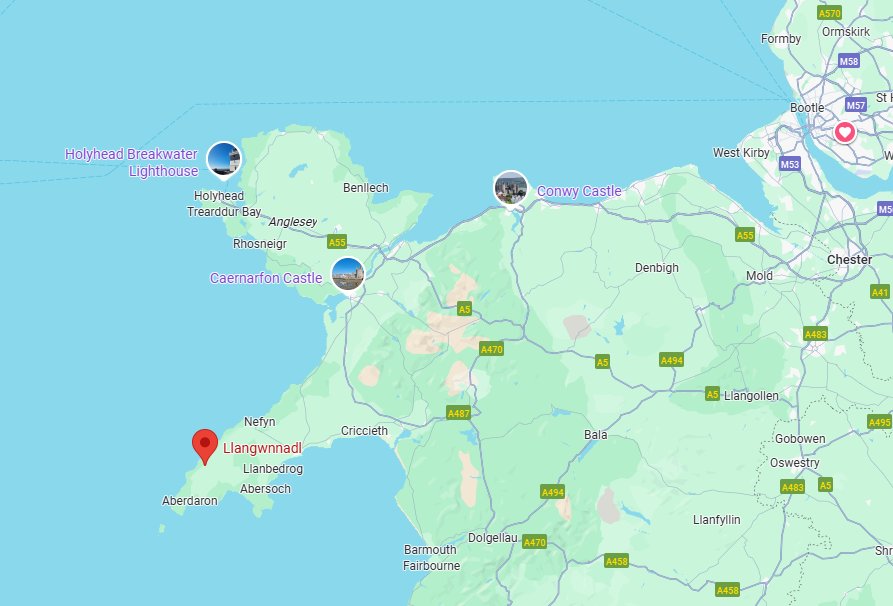
The Lleyn Peninsula* is the relatively low-lying tongue of land jutting into the Irish sea south of Anglesey and west of the spectacular peaks of Snowdonia, making the map of Wales look like a floppy-eared pig. In the 1950s it was pretty undeveloped, with the small seaside resorts of Abersoch and Aberdaron as far as most holidaymakers ventured (that’s if they got further than Butlins). Agriculture and fishing were the mainstays of the economy and Welsh was the first (by some residents only) language spoken.
The little fishing port of Pwllheli on the south coast was where we changed buses for the final time, to the local service to Aberdaron whose route took us via increasingly smaller towns and villages whose names I can still remember without prompting: Nevin*, Edern, Tydweiliog* and finally our destination, Llangwnnadl. It wasn’t a village in the accepted sense; it consisted of a Welsh chapel and a Post Office/general store, with widely scattered farms and cottages around it. I have a faint memory of the bus stopping at a crossroads which was as close as the bus took us, from where we could see the “village” such as it was, the words POST OFFICE whitewashed on the roof of that building, just in case there was any doubt.
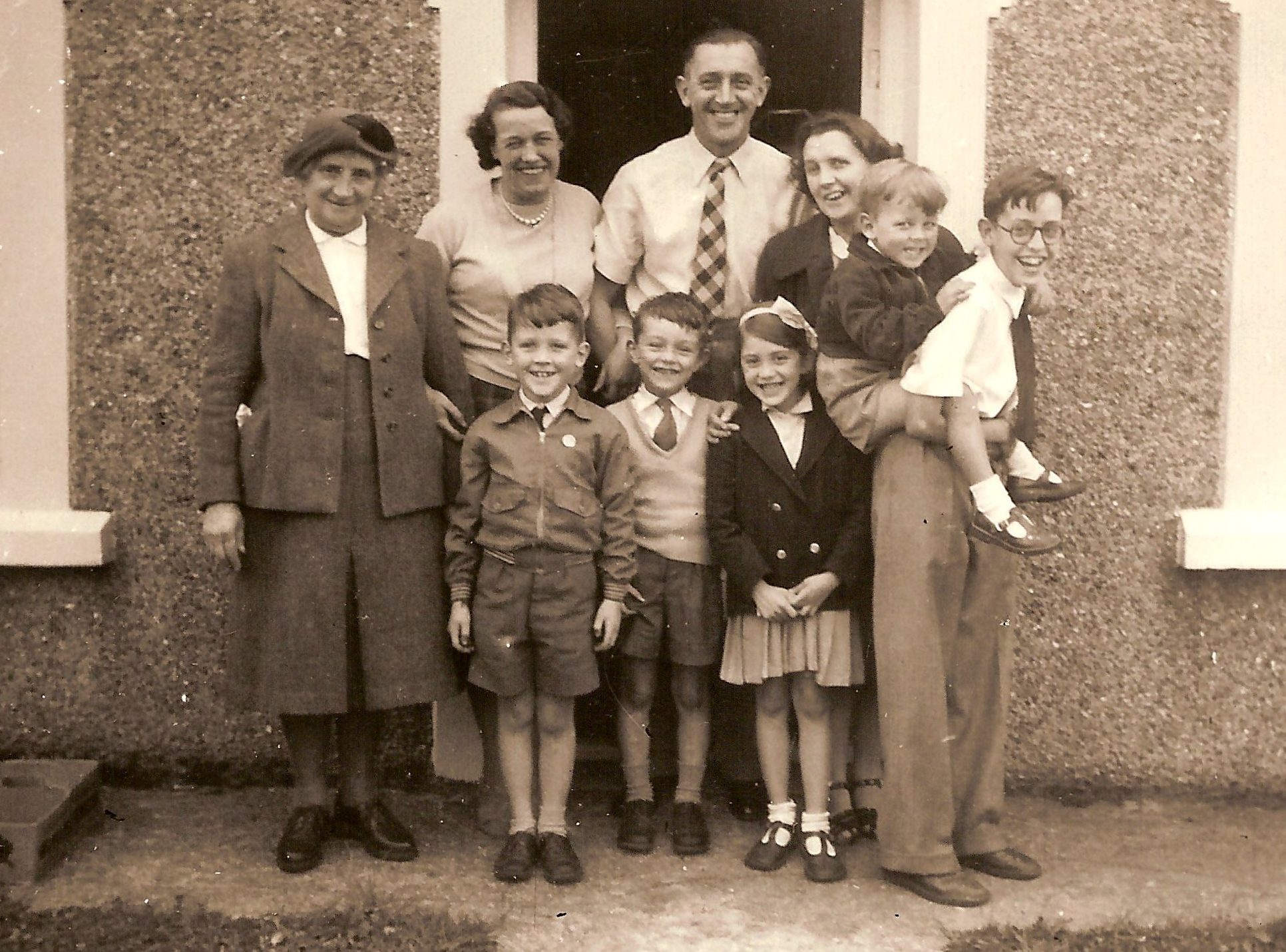
Front: Me, Grahame, Alison
From that point it was half a mile walk to the cottage, and of course we had luggage to carry. In the fifties suitcases didn’t have wheels. The adults must have done all the “lugging”; we were children were far too small to have been much help. One holiday we arrived at the cottage to find it had been empty for weeks and a colony of flying ants had occupied one bedroom – fun for us children, less so for the adults.
The Post Office was where we bought most provisions – bread, butter, biscuits, cereals. I’m pretty sure there wasn’t a fridge (we didn’t have one at home either), which meant that milk had to be bought daily, and where else would we get it but from the farm which was the next house just fifty yards down the lane. Most days it was our job as children to “go for the milk” and we were always given a warm welcome by Mrs Jones which usually included a sweet or a biscuit along with the jug of fresh milk. Mr Jones was often resting in his armchair, because of course he’d already done half a day’s work by the time we arrived. Often we’d collect a box of fresh laid eggs as well.
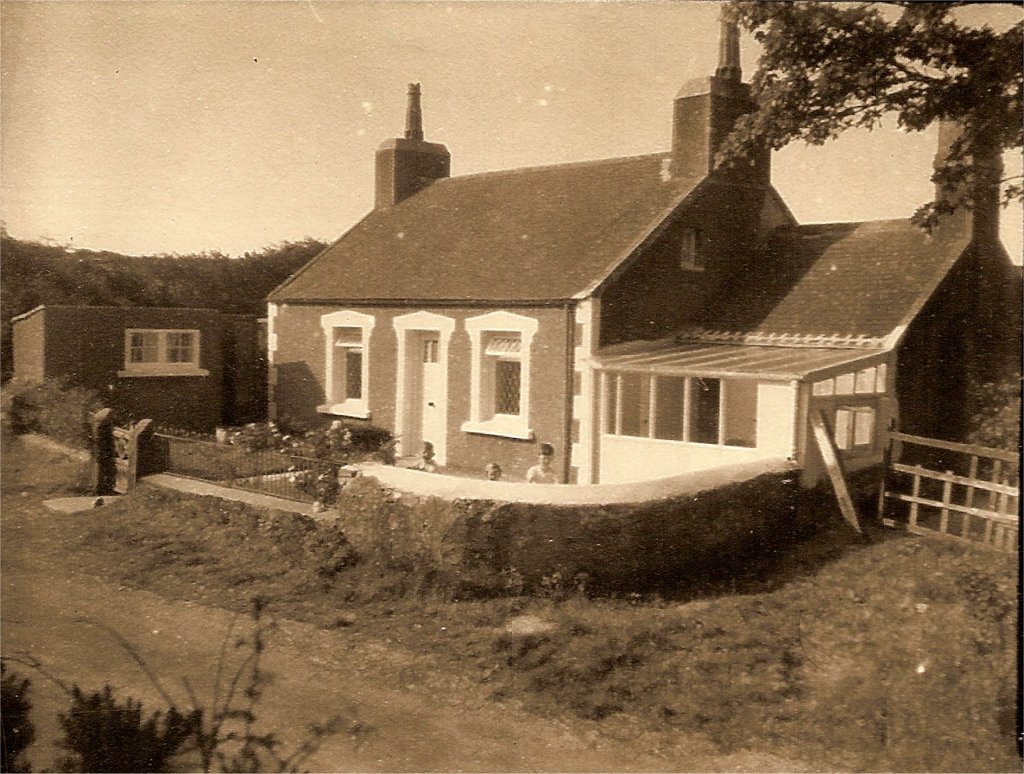
I’ve had to look at old photos to remind myself of the layout of Efail Bach and answer the biggest mystery of all: how did we get everyone in? The front door opened on to a single lounge/living room extending the width of the building with a fireplace each end. Somewhere there must have been a staircase leading to three attic bedrooms: children all occupied the middle one – we were “top and tailed” where necessary to fit up to four of us in. Parents must have slept in the ones at each end, though there can’t have been standing room.
Photos show quite a big ground floor extension to the right, with a lean to conservatory on the front – I think this must have constituted the kitchen and bathroom. And to the left was a separate annexe which I’d totally forgotten. This may have been Nana’s bedroom, or any other visiting adult(s).
But the one room all children remembered was of course the smallest. It was our first experience of an outside loo, a chemical one up at the top of the garden along a concrete path, with a curious flushing mechanism, a strange smelling blue liquid beneath. Fortunately we had very little rain on our holidays and I don’t remember ever getting wet on treks to “Ty bach”.
*I’ve used the Anglicised spellings that were current at the time. It’s now Llŷn (not even the English “peninsula” seems to be used) and the correct Welsh placenames you can easily find on Google maps if you’re so inclined.
 Dave's Memories
Leave a comment